
The P&L statement summarizes the cumulative effect of a company’s gains, revenues, expenses, and losses financial statements over the reporting period. The financial statements are interconnected through shared balances and sequential reporting. Net income from the income statement feeds into retained earnings on both the balance sheet and the statement of changes in equity. The ending cash balance on the statement of cash flows appears as cash on the balance sheet.
Two common methods for using financial statements
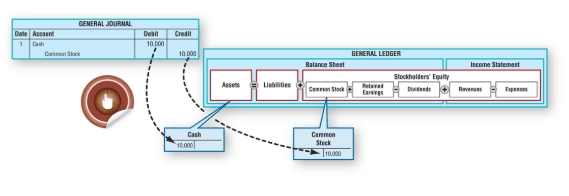
The balance sheet depicts a company’s liabilities, assets, and equity; the income statement details revenues and expenses; while the cash flow statement lists all the cash going in or out of the company. All of this information is essential to form a complete and well-rounded understanding of a company’s financial performance. These cash flows are divided into cash flows from operating activities, investing activities, and financing activities. The investing activities section contains cash flows from the purchase or sale of investment instruments, assets, or other businesses.

Operating Activities

Investors keep an eye on equity growth as a measure of managerial efficiency. The company must pay attention to liability management to maintain a good https://www.bookstime.com/ financial position. High liabilities compared to assets would risk the institution’s stability. Hence, creditors consider the level of liabilities before granting additional credit. Financial statements do not exist in isolation—they are generated under a systematic accounting framework.
Cash Flow Statement Structure

We will add it to the beginning cash balance to get the ending figure of cash and cash equivalents. Both systems aim to enhance financial statement analysis by promoting transparency and consistency. Financial statements are commonly used by company leadership, existing and potential investors, market analysts, lenders, and a company’s customers. Suppose Company ABC takes out a $5,000 loan from a bank, with a five-year term.

- Each pocket of financial information complements the others into a well-rounded financial picture.
- The allowance for doubtful accounts estimates total accounts receivable amounts not expected to be collected from customers.
- Our Financial Statements Cheat Sheet provides you with an overview of each of the five external financial statements issued by U.S. corporations.
- Advanced accounting software simplifies financial reporting, providing automatic insights that allow you to focus on growing your business in 2025’s competitive landscape.
- Financial statements, such as income statements and cash flow statements, help analyze a company’s earnings and dividends.
Arjun is also an certified stock market researcher from Indiacharts, mentored by Rohit Srivastava. Double-entry bookkeeping emerged in 1494 when Luca Pacioli published a text describing the system of using journals and ledgers with separate debit and credit categories. Business assets are everything that your company owns with a value that’s quantifiable in dollars. Warranty obligations are the current portion of estimated customer warranty expenses related to products sold. Accounts payable is a liability for invoice amounts Suspense Account payable to suppliers or vendors for goods and services purchased on account with credit terms under one year.
- In this section, we will explore various methods of analysis, focusing on financial ratios, trends, and comparisons.
- Financial statement analysis is the process of examining a company’s financial statements in order to make business decisions.
- For example, in the balance sheet, you will see the balance of fixed assets.
- Categorize income statement accounts into revenue and expense groups for better understanding.
- These sections offer context around the company’s financial results and position.
- These are written reports that quantify the financial strength, performance and liquidity of a company.
- There are different formulas—meaning, different ratios—you can use according to which financial statement you’re analyzing.
- In the last step, the merger of adjusted data with standard financial statements occurs.
- We will add it to the beginning cash balance to get the ending figure of cash and cash equivalents.
- A Balance Sheet presents an entity’s assets, liabilities, and capital as of a given point in time.
- Linking the 3 statements together in Excel is the building block of financial modeling.
The cash flow margin ratio tells you how much cash you earned for every dollar in sales for a reporting period. It’s important for bringing on investors, getting a loan, or selling your company—a good cash flow coverage ratio shows your business is financially healthy and able to cover its debts. Similar to the current liability coverage ratio, the cash flow coverage ratio measures how well you’re able to pay off debt with cash.